Bristol (Bristol) is an old American compressor manufacturer, founded in the mid-20th century, focusing on the development and manufacture of high-power compressors for commercial and industrial applications. Its products are based on hermetic piston compressors as the core, taking into account part of the scroll technology, widely used in central air conditioning, water chillers, cold storage and other scenarios.
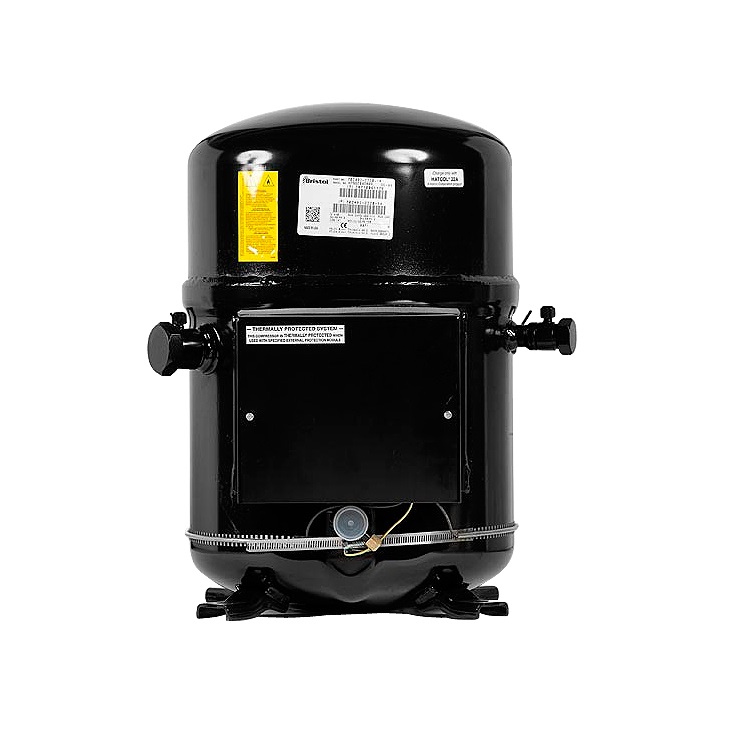
Market positioning: Mainly high-power commercial compressors, mature technology and adapt to high-load scenarios (such as industrial refrigeration, marine refrigeration, etc.), some models also enter the domestic and small and medium-sized commercial market.
Technical characteristics: Known for high energy efficiency, high pressure resistance and low maintenance costs, especially in the field of piston compressors occupy an important position.
Characteristics of Bristol Compressor
1. Core technical characteristics
High reliability design:
Totally enclosed piston structure: cast iron body and high-precision piston assembly, high pressure resistance (maximum discharge pressure up to 4.8MPa), suitable for industrial-grade high-load scenarios.
Temperature tolerance:
Exhaust temperature ≤125℃ (at 150-200mm of exhaust pipe), temperature at the bottom of the casing ≤107.2℃.
Adaptable to the lowest ambient temperature of -29℃, ensuring stable operation in extreme environments.
Long-life design: optimised lubrication system and low-wear materials, with an average service life of over 100,000 hours (commercial scenario).
2. Structural design characteristics
Modular design:
Independent double-cylinder variable capacity technology (TWIN-SINGLE technology): Through double-cylinder switching to achieve automatic adjustment of high and low loads, reducing the number of starts and stops.
Low vibration and noise reduction:
Piston type model adopts balance block vibration reduction design, noise ≤ 75dB(A);
Scroll type models (such as BENCHMARK series) noise can be reduced to below 65dB(A).
3. Maintenance and operation characteristics
High maintainability:
The piston compressor supports separate replacement of key components such as valve sets and crankshafts to reduce maintenance costs.
Intelligent Management:
Some models integrate pressure sensors with IoT interface to support remote monitoring of operation status.
Start-stop protection: Limiting start-stop ≤ 6 times per hour to extend motor life.
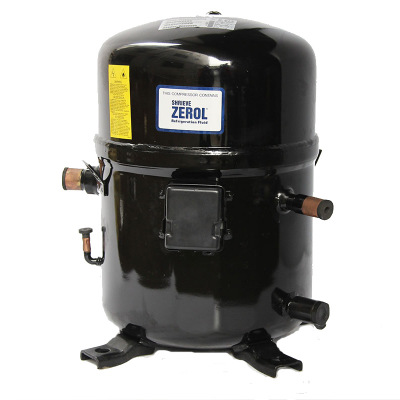
Commom Types of Bristol Compressor
1. Hermetic Piston Compressor
Features: Wide range of applicable pressure (especially for medium and high pressure scenarios), high thermal efficiency, low material costs, maintainability.
Applications: Commercial central air-conditioning, industrial chiller, cold storage, etc.
Representative series: H23A, H2BG, H2NG, H25G series.
2. Scroll Compressor
Features: Interactive scroll technology (BENCHMARK series) and independent double-cylinder variable capacity technology (TS series), high energy efficiency, low noise, but higher maintenance costs.
Applications: High-end home air conditioners, small commercial air conditioners.
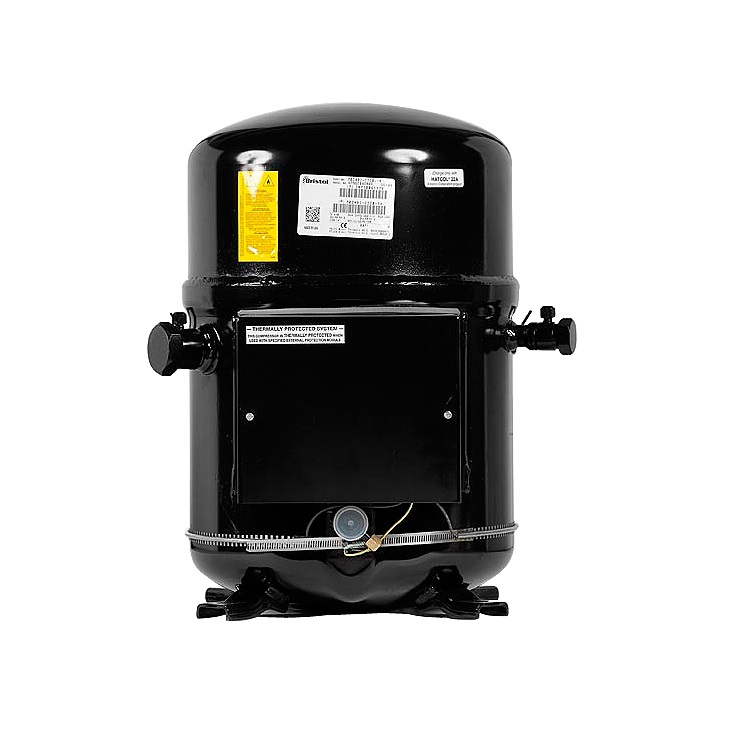
Technical Features and Comparison
1. Piston vs Scroll
Piston type: Low cost, high pressure resistance, but high vibration and complicated structure.
Scroll type: High efficiency and low noise, suitable for continuous operation, but maintenance requires overall replacement of parts.
2. Market Positioning
Commercial field: Mainly high-power piston type (such as H2NG series), suitable for industrial chiller, marine refrigeration and so on.
Domestic field: A small number of scroll type models (such as TS series) for high-end air conditioners.
Technical Parameters of Common Models
| Model |
Cooling Capacity |
Input Power |
Applicable Refrigerants |
| H25G144DBEE |
3423W (11667 BTU/h) |
11550W |
R22 |
| H2BG104DBE |
24755W (84390 BTU/h) |
8155W |
R22 |
| H2NG204DRE |
173680 BTU/h |
16770W |
R22 |
| H23A383DBE |
8.49kW (31,410 BTU/h) |
3050W |
R22 |
| H2NG294DPE |
238000 BTU/h |
25300W |
R22 |
To learn more about Bristol compressor.


