Within the refrigeration parts procurement and compressor maintenance industry, when it comes to lubricants for HFC refrigerants, POE polyol ester oil is the first thing most people think of. Yet one lubricant, factory-filled in many Hitachi hermetic compressors, is frequently misclassified — Idemitsu DAPHNE HERMETIC OIL FVC32D. It is not POE, but PVE polyvinyl ether synthetic refrigeration oil. This is its most overlooked characteristic, which determines the long-term stability of refrigeration systems.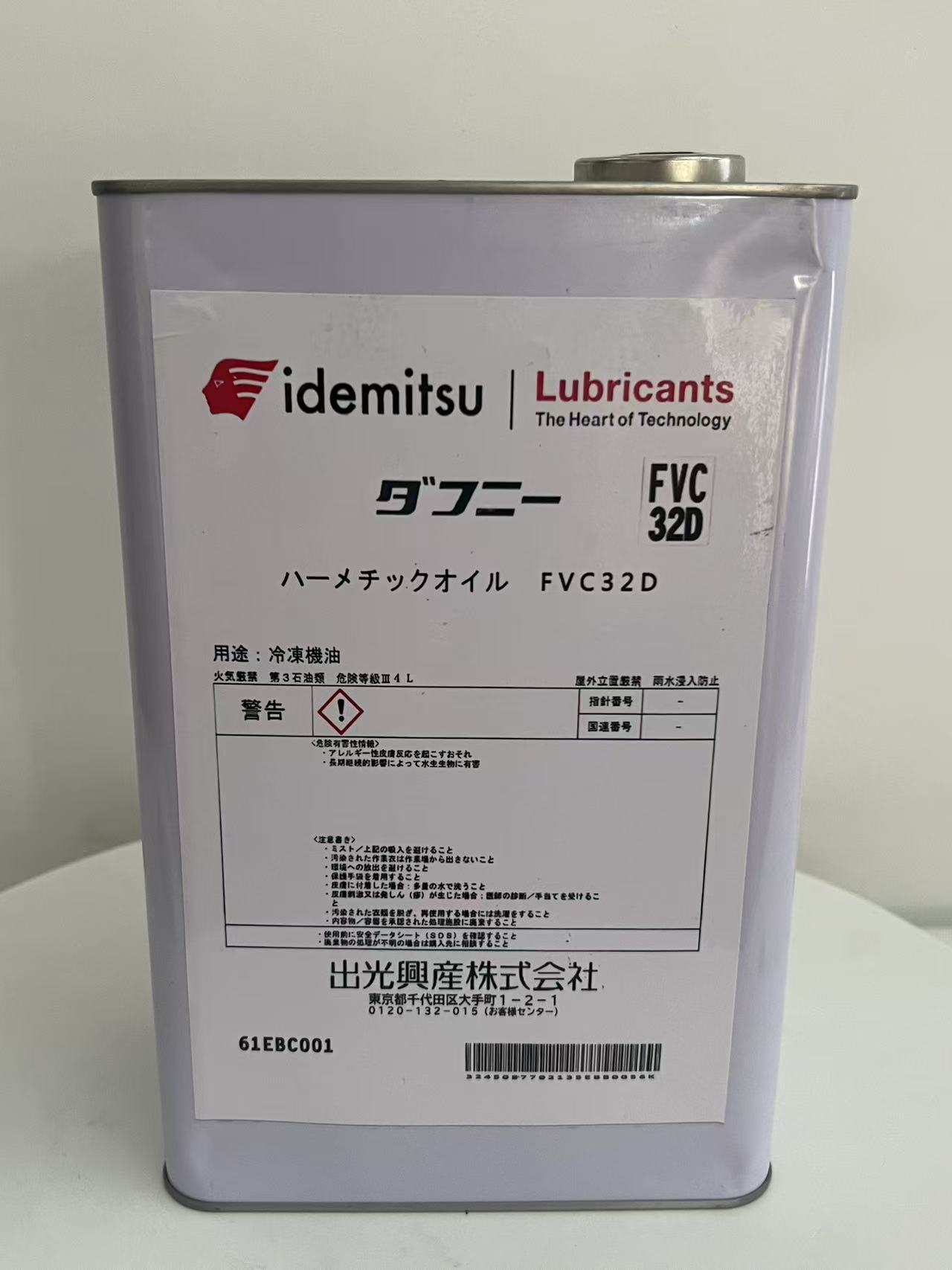
FVC32D is polyvinyl ether (PVE) synthetic base oil blended with anti-oxidation and anti-wear additives. It is specially developed for hermetic compressors using HFC refrigerants, compatible with R134a, R404A, R407C, R410A, R507 and other HFC refrigerants.
The biggest weakness of POE oil is susceptibility to hydrolysis in the presence of water. Hydrolysis produces organic acids and sludge, clogging capillary tubes and eroding motor windings — this is one of the most common chronic failure sources in refrigeration systems.
PVE molecules contain no hydrolysable ester groups. It delivers remarkably better hydrolysis resistance than POE. Under slight moisture ingress, it will not generate organic acids and sludge through hydrolysis as POE does, resulting in lower risk of capillary blockage. This defines the core design positioning of FVC32D.
FVC32D has good miscibility with HFC refrigerants such as R410A, R404A and R407C, and avoids phase separation under wide temperature fluctuations of the system. For commercial air conditioning and low-temperature cold storage units with frequent start-stop cycles, refrigerant carries oil back smoothly, preventing compressor dry wear caused by insufficient lubrication. This is why Hitachi pre-fills FVC32D in some of its hermetic scroll compressors.
In hermetic compressors, refrigeration oil performs dual functions: lubrication and motor insulation. FVC32D features high volume resistivity with slow insulation degradation during long operation, lowering leakage risks of hermetic compressors. It suits commercial air conditioning and small low-temperature equipment with built-in motors. Meanwhile, it shows good material compatibility with seals and coil magnet wire, and hardly causes seal swelling or corrosion.
With pour point as low as -47.5℃, for low-temperature cold rooms and supermarket display cabinets running continuously at low temperatures, the lubricant will not solidify after shutdown. It can rapidly form an oil film upon startup and reduce abrasion at the moment of start.
Prioritize FVC32D (PVE) as a hydrolysis-resistant alternative to POE, if your system meets all below conditions: hermetic compressor, HFC refrigerant, high sensitivity to sludge and capillary clogging, reliable cold start performance at low temperature, plus strict moisture control for opened oil.


