
- EN
In HVAC and refrigeration equipment procurement, the compressor serves as the core power component. The appropriateness of its selection directly affects the terminal equipment's operating efficiency, service life, and maintenance costs. Daikin compressors, with their mature variable frequency technology and precision manufacturing processes, have secured a significant market share in commercial air conditioning, cold storage, and specialty refrigeration applications.
Daikin's technical expertise in the compressor field is primarily reflected in two areas:
1. Mature Application of Variable Frequency Regulation Technology
Daikin's DC inverter compressors enable wide-frequency operation, dynamically adjusting rotational speed based on actual thermal load. This regulation capability allows equipment equipped with Daikin compressors to maintain relatively high energy efficiency under partial load conditions, while simultaneously reducing start-stop cycles and extending overall system life.
2. Structural Advantages of Swing Compressors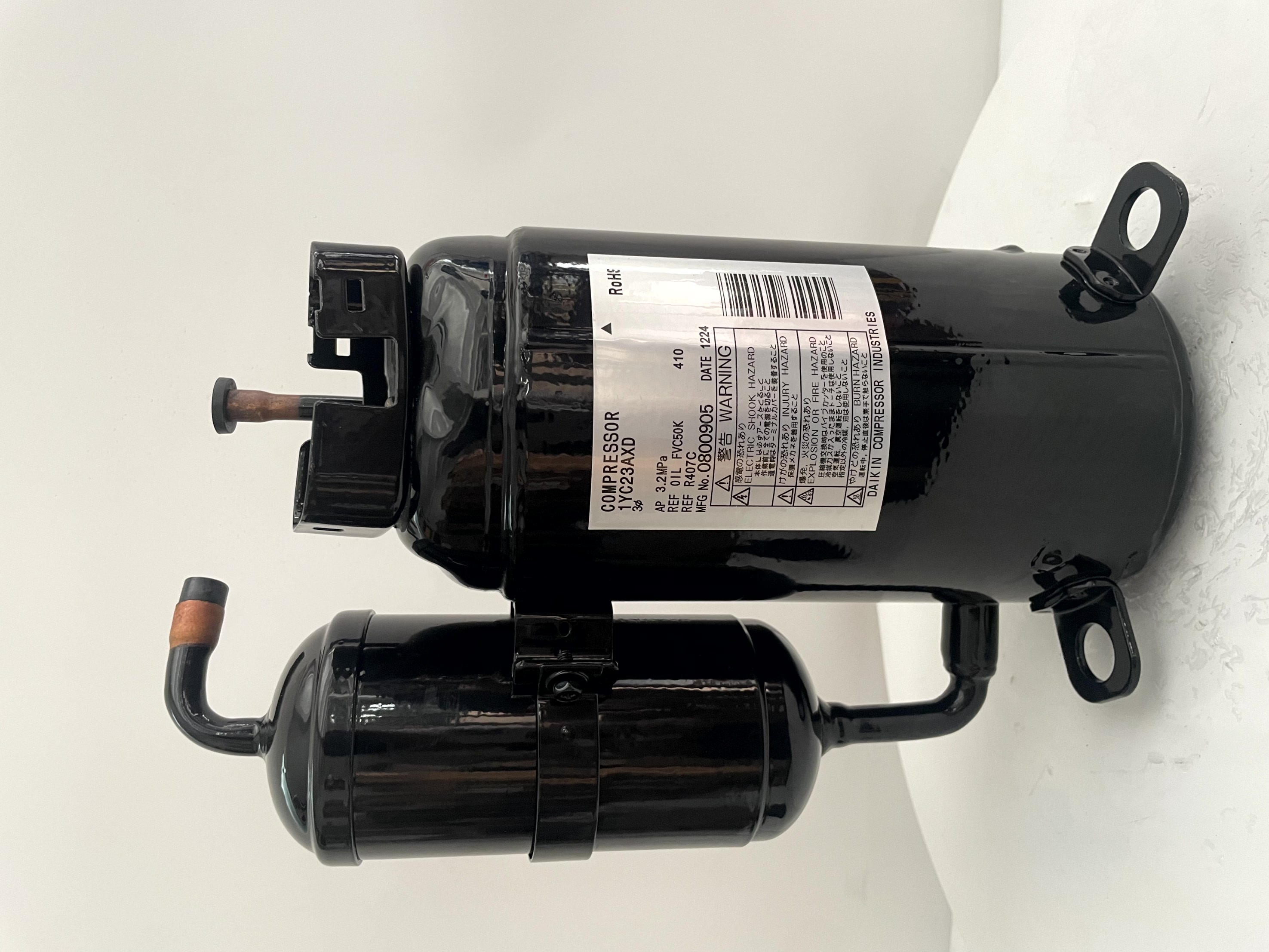
In the residential and light commercial multi-split system sector, Daikin extensively utilizes swing compressors. The core design concept converts part of the rolling friction found in traditional scroll compressors into sliding friction, thereby reducing mechanical losses during operation. This design demonstrates particularly notable volumetric efficiency advantages over some competing scroll products under low-temperature heating conditions.
Different terminal equipment types place varying performance priorities on compressors. The following analysis covers three primary application categories:
Equipment Types: Variable refrigerant flow central air conditioning systems used in office buildings, shopping malls, hotels, and similar venues.
Performance Requirements:
Extended partial load operation, requiring outstanding energy efficiency in the 30%~80% load range
Compact installation space, with demands on compressor footprint and noise levels
Recommended Direction:
Daikin swing-type inverter compressors represent the mainstream choice for this scenario. Their vibration control at low-frequency operation is superior, making them well-suited for the frequent output adjustment patterns typical of multi-split systems. For projects located in regions with low winter temperatures (such as northern China), models specifically designed for low-temperature heating applications are recommended.
Equipment Types: Water-cooled/air-cooled screw chillers, modular chiller units used for centralized cooling in factories, data centers, and large buildings.
Performance Requirements:
Extended full-load or near-full-load operation, demanding high stability in continuous compressor output
Large displacement capacity, typically requiring single units covering the 10HP~40HP power range
Recommended Direction:
Daikin scroll compressors are the primary choice for this scenario. The scroll structure delivers smoother compression processes and higher volumetric efficiency under large-displacement conditions. For facilities with extremely high cooling continuity requirements, such as data centers, special attention should be given to the compressor's operating envelope (evaporating and condensing temperature boundaries) to ensure normal operation under extreme weather conditions.

Equipment Types: Small cold rooms, refrigerated display cases, refrigeration units for cold chain transportation.
Performance Requirements:
Low evaporating temperatures (typically -10°C to -30°C), requiring sufficient displacement output under low compression ratio conditions
Frequent defrost cycles, demanding adequate liquid slugging resistance
Recommended Direction:
Daikin's applications in this field require model selection based on specific evaporating temperature ranges. In low-temperature scenarios, the volumetric efficiency advantages of swing compressors become more pronounced. Particular attention should be paid to the Vapor Injection (EVI) feature—for freezing applications below -15°C, models equipped with EVI technology can significantly enhance low-temperature heating (cooling) capacity.
Before finalizing a specific model, it is recommended to verify the following three parameters against the terminal equipment's design conditions:
Evaporating Temperature Range: Confirm that the compressor's minimum allowable evaporating temperature covers the terminal equipment's design conditions. Different models have significantly different low-temperature applicability boundaries.
Power Supply Specifications: Daikin compressors are available in multiple configurations, including single-phase 220V/50Hz and three-phase 380V/50Hz. The selection must align with the equipment's power distribution scheme.
Lubricant Type: Different models are matched with specific refrigeration oils. When replacing or servicing units, Daikin-specified original oils must be used; otherwise, bearing life may be adversely affected.


